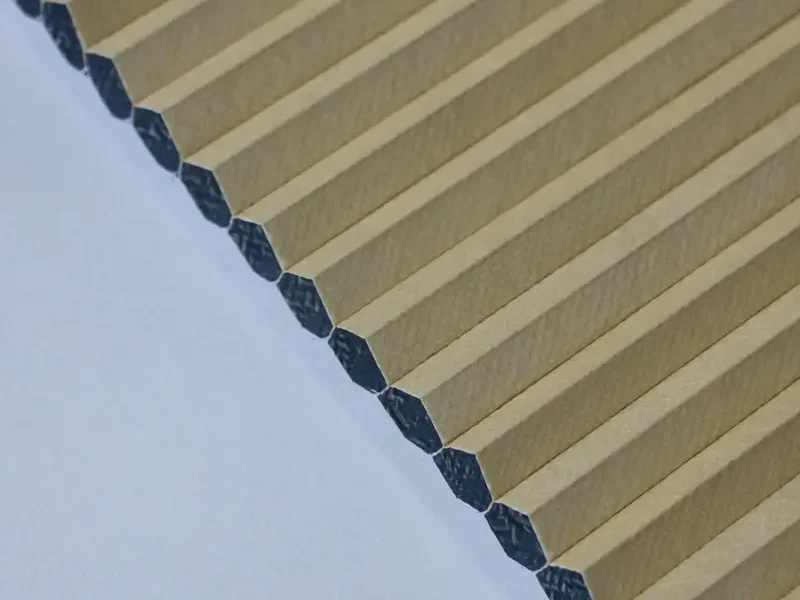
The Engineering of Elegance: A Deep Dive into Honeycomb Blinds Fabric Material
26mm Electric Built-In Plain Honeycomb Curtain Fabric W…
For buyers, designers & sourcing teams
CategoryUncategorized
Use this article as a technical reference. Contact us if you need fabric samples, specifications or project support.
In the high-end custom home market, window treatments are no longer viewed as mere accessories; they are critical components of a home’s thermal and acoustic envelope. When discerning homeowners and interior designers discuss performance, the conversation inevitably leads to honeycomb blinds fabric material.
Unlike standard roller shades or traditional curtains, the material science behind cellular shades is a masterclass in polymer engineering and textile innovation. As we navigate the trends of 2026, understanding the nuances of these materials is essential for anyone looking to invest in long-term home value, energy efficiency, and smart home integration.
1. Beyond Basic Polyester: The Evolution of Cellular Polymers
At its core, most honeycomb blinds fabric material is composed of high-tenacity polyester. However, in the premium segment—occupied by industry leaders like Hunter Douglas—the “polyester” tag is just the beginning.
Spun-Laced vs. Woven Structures
The choice of manufacturing process defines the fabric’s longevity and “hand feel.”
Spun-Laced Materials:
- Created by entangling fibers with high-pressure water jets, this material offers a soft, fabric-like texture. It is highly resistant to crushing, making it ideal for the repetitive folding required in honeycomb structures.
Precision-Bonded Materials:
- These offer a crisper, more architectural look. They are often favored for modern, minimalist interiors where sharp pleat retention is a priority.
The Rise of rPET and Bio-Based Fibers
In 2026, sustainability is the hallmark of luxury. High-end fabric materials now utilize Recycled Polyester (rPET), often sourced from ocean-bound plastics. But the innovation doesn’t stop there. We are seeing a move toward bio-based polymers derived from renewable sources like corn or castor beans, which offer the same durability as petroleum-based plastics but with a significantly lower environmental impact.
2. Multi-Layered Engineering: The “Cell-Within-A-Cell” Advantage
When we talk about “fabric material” in the context of high-performance blinds, we are often talking about a composite structure. The gold standard for insulation is the cell-within-a-cell design (notably the Hunter Douglas Duette® Architella®).
Why Three Layers of Fabric Matter
By nesting one honeycomb cell inside another, manufacturers create three distinct air pockets. This requires a fabric material that is:
Ultra-Lightweight:
1. To prevent the stack from becoming too heavy for motorization systems.
Highly Breathable yet Insulating:
2. To manage moisture while trapping heat.
Dimensionally Stable:
3. To ensure that the inner and outer cells move in perfect harmony without warping.
This complex material arrangement can reduce heat transfer through windows by up to 50%, a technical feat that justifies the premium price point of high-end custom window treatments.
3. Functional Coatings and Specialized Membranes
The performance of a honeycomb blinds fabric material is often enhanced by “invisible” layers that provide specific functional benefits.
Foil-Lining for Total Blackout
In media rooms and master suites, blackout performance is non-negotiable. This is achieved by laminating a micro-thin layer of metalized polyester (foil) between the fabric layers. This foil acts as a radiant barrier, reflecting heat back to the source while ensuring zero light leakage through the fabric itself.
Anti-Static and FR Treatments
Premium materials are treated at the fiber level with:
Anti-Static Coatings:
- These prevent the build-up of dust, keeping the blinds cleaner for longer—a critical selling point for high-ceiling installations.
Flame Retardancy (FR):
- For commercial projects and luxury condos, fabric materials must meet strict NFPA 701 standards. High-end materials integrate FR properties into the polymer chain itself, ensuring that the protection never “washes off” or degrades over time.
4. Interaction with Smart Home Systems: The PowerView® Synergy
In 2026, the material choice is inextricably linked to Smart Home Automation. Systems like Hunter Douglas PowerView® rely on the physical properties of the fabric to function optimally.
Weight-to-Strength Ratio
The fabric material must be strong enough to span large architectural windows (often up to 12 feet wide) while remaining light enough for battery-operated motors to lift reliably for years. Materials that are too heavy increase the strain on motors, leading to shorter battery life and potential failure.
Heat Resistance in the Pocket
When blinds are retracted, the fabric is tightly stacked. In high-sun environments, the temperature inside this “fabric stack” can rise significantly. Premium honeycomb materials are engineered to withstand these temperatures without the pleats losing their shape or the fabric becoming brittle.
5. The Business Model Shift: Expert-Led Material Selection
The complexity of modern honeycomb blinds fabric material has fueled a shift in how these products are sold. We are moving away from the “one-click” e-commerce model toward an expert-led consultation model.
Content-Led Education
High-end brands succeed by educating the consumer on why a specific material matters. By explaining the R-values, UV protection ratings, and acoustic dampening properties, dealers move the conversation from “price per window” to “value per room.”
The Role of the Local Dealer
Because these materials are high-tech, professional measurement and installation are required to ensure the fabric hangs correctly and the thermal seal is maintained. This “offline service” ensures that the technical advantages of the material are actually realized in the home.
6. Aesthetic Trends for 2026: Texture is King
While the science is impressive, the fabric material must also satisfy the eye. The 2026 palette is defined by:
Linen and Silk Blends:
- Providing a natural, irregular texture that softens the geometric precision of the honeycomb cells.
Micro-Weave Patterns:
- Subtle, tone-on-tone patterns that add depth and “visual weight” to a room.
Muted Earth Tones:
- Shades like “Sandstone,” “Eucalyptus,” and “Soft Charcoal” are replacing the clinical whites of previous decades.
Conclusion: Investing in Material Excellence
The selection of honeycomb blinds fabric material is one of the most consequential decisions a homeowner can make for their interior environment. It is where the physics of heat transfer meets the art of interior design.
By choosing a material that offers high-tech insulation, sustainable sourcing, and smart-home compatibility, you are not just covering a window—you are enhancing the intelligence and comfort of your living space. In the world of high-end home customization, the material truly is the message.
Published by: Accio Design Strategy Keywords: Honeycomb blinds fabric material, cellular shade engineering, Hunter Douglas Duette, energy efficient fabric, smart home window treatments, 2026 luxury home trends.
Need help choosing the right cellular shade fabric?
Send us your application, light-control requirement, pleat size and estimated quantity. We can recommend suitable fabrics and sample options.
Related Articles
Explore more practical guides, product knowledge and window covering insights.
Honeycomb Shade Fabric: A Complete Guide to Performance,
Honeycomb shade fabric combines light control, thermal ins…
READ ARTICLE →
Sustainable Window Treatments: Recycled Polyester Honeyc
ODM OEM Custom Doors and Soundproofing Material Pleated Ho…
READ ARTICLE →
How to Choose the Right Pleat Size for Honeycomb Shades
Pleat size affects the appearance, stacking performance an…
READ ARTICLE →