Factory Direct ODM OEM Custom Materials Pleated Honeycomb Cellular Shades Blinds Fabric for Window
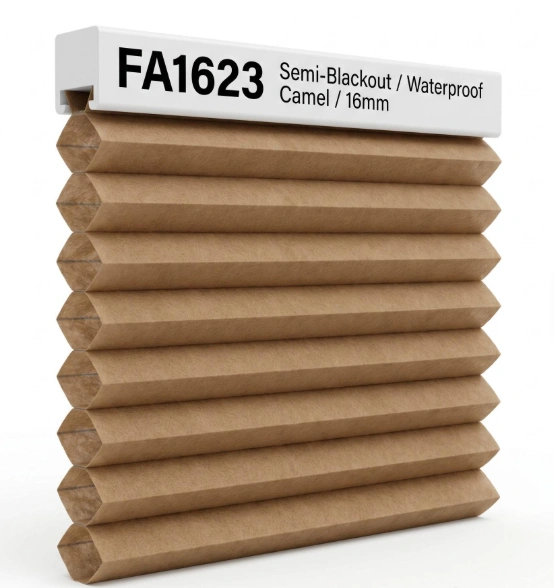
Custom 16mm Camel Semi Blackout Spunlace Non-woven Wate…
For buyers, designers & sourcing teams
CategoryUncategorized
Use this article as a technical reference. Contact us if you need fabric samples, specifications or project support.
Honeycomb curtains, also known as cellular shades, have become a mainstream choice for modern home decoration and commercial window shading due to their unique hollow honeycomb structure, excellent heat insulation, sound insulation, and light control performance. Different from ordinary roller blinds and fabric curtains, the core advantages of honeycomb curtains come from their structural design: the closed honeycomb air layer locks static air, effectively blocks heat transfer and noise penetration.
However, many users are confused by the diverse specifications of honeycomb fabrics on the market. The difference in cell aperture (10mm, 12mm, 16mm, 20mm, 25mm) and cavity structure (single cell vs double cell/ double-layer honeycomb) directly determines the curtain’s heat insulation effect, shading rate, stacking height, aesthetic presentation, and applicable scenarios. Choosing the wrong specification will lead to problems such as poor heat insulation in summer, light leakage affecting sleep, or excessive stacking occupying window field of view.
This article will conduct an in-depth and detailed dimensional analysis of common honeycomb fabric specifications, sort out the performance differences of different apertures and structures, and provide accurate selection suggestions for home decoration, engineering installation and soft outfit matching.
Part 1: Core Principle of Honeycomb Curtain Performance
The excellent performance of honeycomb curtains is based on the static air insulation principle. Air is a poor heat conductor. The independent closed honeycomb cavity can form a stable air barrier between the indoor and outdoor sides of the window.
In summer, it blocks outdoor solar radiant heat and high-temperature air from entering the room, reducing the indoor temperature and relieving the load of air conditioning; in winter, it locks indoor heating to prevent heat loss through window gaps, realizing warm winter and cool summer. At the same time, the multi-cavity layered structure can weaken sound wave transmission, bringing better sound absorption and noise reduction effects than ordinary curtains.
The larger the honeycomb aperture and the more the number of cavity layers, the thicker the air barrier, and the stronger the heat insulation and sound insulation performance, but the corresponding stacking height and fabric thickness will also increase, and the aesthetic sense of thin and light will be reduced. This is the core balance logic of honeycomb curtain selection.
Part 2: Full Performance Analysis of 10/12/16/20/25mm Single Cell Honeycomb Fabrics
Single cell honeycomb fabric refers to a single-layer independent honeycomb structure, which is the most mainstream basic style of honeycomb curtains. The five common aperture specifications cover ultra-thin light-transmitting models to thickened high-insulation models, with clear differentiation in shading, heat insulation, stacking effect and applicable scenarios.
1. 10mm Single Cell Honeycomb Fabric (Ultra-Thin Mini Aperture)
As the smallest conventional aperture of honeycomb curtains, 10mm single cell features compact cell arrangement and ultra-thin fabric body. Its biggest advantage is ultra-low stacking height and exquisite flatness.
erformance characteristics: The air cavity is small, the heat insulation performance is basic, which can slightly block direct sunlight and reduce window heat radiation, but it cannot cope with strong high-temperature exposure. The fabric is light and thin, with diverse light transmission grades (light-transparent, semi-shading, full shading). The light-transmitting model has excellent light transmission and no darkening of the room; the full-shading model has uniform shading and no light leakage at the seam. The stacking height is the smallest among all specifications, almost no occupation of the upper window space after lifting, and the window field of view is maximized.
Applicable scenarios: Indoor soft decoration windows, bathroom small windows, aisle windows, and indoor areas with low heat insulation demand and priority for light transmission and minimalist aesthetics. It is also very suitable for high-rise weak light rooms, which will not cause indoor dimming.
2. 12mm Single Cell Honeycomb Fabric (Entry Universal Aperture)
12mm is an upgraded version of 10mm, with a slightly enlarged cell space and balanced comprehensive performance, which is the most cost-effective universal specification for household basic use.
Performance characteristics: The air cavity capacity is increased compared with 10mm, the heat insulation effect is significantly improved, which can effectively isolate conventional indoor and outdoor temperature differences, avoid window surface heat gathering in summer, and reduce cold wind penetration in winter. The shading performance is stable, the fabric texture is delicate, the cell arrangement is dense and uniform, and the three-dimensional sense is moderate. The stacking height is slightly higher than 10mm, still belonging to the thin and light category, with no burden on window decoration.
Applicable scenarios: Bedroom, living room, study, dining room and other conventional household windows, suitable for most urban residential window types, meeting daily light adjustment and basic heat insulation and noise reduction needs.
3. 16mm Single Cell Honeycomb Fabric (Balanced High-Value Aperture)
16mm is a popular mainstream specification in the market, perfectly balancing heat insulation performance, aesthetic three-dimensional sense and stacking effect, and is the preferred choice for most high-quality home decoration.
Performance characteristics: The moderate large cavity forms a stable static air layer, with excellent heat insulation and temperature locking capability, which can resist medium-intensity solar exposure, significantly reduce indoor temperature difference fluctuation, and save daily air conditioning and heating energy consumption. The three-dimensional sense of the honeycomb is prominent, the fabric layering is strong, and the window decoration texture is high-grade. The shading rate of the full-shading version can reach 99.9%, realizing absolute blackout sleep environment; the semi-shading version has soft light transmission and no glare. The stacking height is moderate, which will not affect the overall aesthetic of the window.
Applicable scenarios: Master bedroom, children’s room, sun room auxiliary window, office window, suitable for families with high requirements for sleep quality and indoor constant temperature.
4. 20mm Single Cell Honeycomb Fabric (Enhanced Heat Insulation Aperture)
20mm single cell belongs to the thickened enhanced specification, focusing on upgrading heat insulation and sound insulation performance, with stronger environmental adaptability.
Performance characteristics: The large-capacity air cavity greatly improves the heat insulation barrier capability, which can effectively cope with long-time strong sunlight exposure and high-temperature baking in summer, and significantly reduce the heat transfer efficiency of the window. The sound absorption and noise reduction effect is upgraded, which can weaken outdoor traffic noise and environmental noise more effectively. The fabric is thick and solid, with strong sagging sense, uniform shading, no light leakage, and durable and wear-resistant. The disadvantage is that the stacking height is significantly increased compared with small apertures, and the window top gap needs to be reserved during installation.
Applicable scenarios: Low-floor sunny windows, street-facing noisy windows, large bay windows, apartment sun rooms, and areas with large indoor and outdoor temperature differences.
5. 25mm Single Cell Honeycomb Fabric (Top Large Aperture Single Cell Specification)
25mm is the largest aperture specification of conventional single-cell honeycomb curtains, with extreme single-layer heat insulation performance and strong three-dimensional visual impact.
Performance characteristics: The super-large closed air cavity achieves the top-level heat insulation effect of single-cell fabrics, which can resist extreme high-temperature exposure, effectively control indoor temperature balance, and has outstanding energy-saving effects. The honeycomb three-dimensional sense is extremely strong, the window decoration is stylish and atmospheric, and the texture is unique. The shading performance is excellent, the thickened fabric completely blocks ultraviolet rays and strong light. The defect is the highest stacking height of single-cell specifications, which occupies more window top space, and is not suitable for small windows with narrow upper margins.
Applicable scenarios: Large-area floor-to-ceiling windows, villa windows, large sun rooms, commercial office windows, high-rise open sunny windows, and scenes pursuing extreme heat insulation and high-end decorative effects.
Part 3: Single Cell vs Double Cell (Double-Layer Honeycomb) Comprehensive Performance Contrast
On the basis of single-cell honeycomb, double-cell (double-layer honeycomb) fabric adopts upper and lower double-layer closed honeycomb structure, forming double air barrier protection. The two structures have essential differences in heat insulation, shading, stacking height, applicability and price, which are suitable for different extreme scenarios.
1. Heat Insulation & Temperature Locking Contrast
Single cell: Only a single-layer air cavity isolates heat transfer. The heat insulation effect is positively correlated with the aperture. The smaller the aperture, the weaker the heat insulation; the larger the aperture, the better the heat insulation. It can meet the constant temperature needs of conventional households, but it is slightly insufficient in extreme high temperature or cold weather, and the heat insulation will have slight attenuation after long-time strong light exposure.
Double cell: Double-layer superimposed closed air layer forms a dual heat insulation barrier, which cuts off heat conduction, heat convection and heat radiation in an all-round way. Compared with the same aperture single cell, the heat insulation performance is increased by 30%-50%. In summer, it can effectively block outdoor high temperature from pouring in, and the indoor cooling effect is more obvious; in winter, it locks indoor heating more efficiently, avoids heat loss through windows, and has excellent anti-freezing and warm-keeping effect. It is very suitable for seasonal extreme temperature areas.
2. Shading & UV Protection Contrast
Single cell: The shading effect depends on the fabric coating and thickness. The full-shading single cell can realize basic blackout, but there is a slight light transmission risk at the cell stitching gap after long-term use. The UV blocking rate is about 85%-95%, which can meet daily sun protection and light shielding needs.
Double cell: The double-layer fabric is superimposed with double honeycomb structure, with zero stitching gap, no light leakage in the whole area, and the full-shading model achieves 100% blackout. The UV blocking rate is as high as 99.9%, which can completely protect indoor furniture, floors and fabrics from ultraviolet aging, and is more friendly to light-sensitive skin and infant sleep environment.
3. Stacking Height & Appearance Contrast
Single cell: Light weight, thin fabric body, low stacking height after lifting, small window occupation, clean and neat window view, thin and light overall appearance, simple and versatile, suitable for minimalist, light luxury and various soft decoration styles.
Double cell: Due to the double-layer structure, the fabric thickness and weight are increased, and the stacking height is about 40%-60% higher than that of the same aperture single cell. After lifting, it occupies more window top space, the overall three-dimensional sense is stronger, the texture is thicker, and the high-end sense is more prominent, but it is not suitable for small windows and windows with narrow top margins.
4. Sound Insulation & Scenario Adaptability Contrast
Single cell: Single-layer air cavity has general sound absorption effect, which can weaken partial medium and high frequency noise, suitable for quiet residential areas and indoor conventional scenes.
Double cell: Double-layer air cavity forms a multi-level noise reduction structure, which can effectively absorb and isolate low-frequency and high-frequency noise, significantly reduce outdoor traffic noise, pedestrian noise and wind noise, and is the best choice for street-facing buildings, residential areas near roads and noisy urban core areas.
Part 4: Quick Selection Guide & Specification Matching Suggestions
1. Pursue ultra-thin light sense & small window adaptation: Priority 10mm/12mm single cell, low stacking, no occlusion, good light transmission, cost-effective.
2. Household universal balanced choice: 16mm single cell, balanced heat insulation, shading and appearance, suitable for most bedroom and living room scenes.
3. Strong light & high temperature sun room / large window: 20mm/25mm single cell, enhanced single-layer heat insulation, resist strong light exposure.
4. Extreme heat insulation & noise reduction & full blackout demand: Priority double cell honeycomb fabric, suitable for street-facing windows, low-floor sunny windows, high-standard sleep rooms, constant temperature rooms.
5. Small window & narrow window top margin: Avoid large aperture single cell and all double cell specifications, prevent excessive stacking from affecting window opening and aesthetics.
Part 5: Summary
The essence of honeycomb curtain specification selection is to balance heat insulation performance, shading effect, stacking aesthetics and scene demand. Small-aperture single cell (10/12mm) focuses on lightness and versatility, medium-aperture 16mm balances comprehensive performance, large-aperture 20/25mm single cell upgrades single-layer heat insulation, and double-cell double-layer structure breaks through the performance limit of single cell, realizing all-round upgrading of heat insulation, shading and sound insulation.
There is no absolute best specification, only the most matching one. According to the local climate, window size, floor orientation and functional demand, selecting the appropriate honeycomb fabric specification can maximize the use value of honeycomb curtains, create a constant temperature, silent and comfortable indoor living environment, and improve the quality of home soft decoration.
Need help choosing the right cellular shade fabric?
Send us your application, light-control requirement, pleat size and estimated quantity. We can recommend suitable fabrics and sample options.
Related Articles
Explore more practical guides, product knowledge and window covering insights.
How to Pick Full Blackout Honeycomb Fabric: Focus on MS6
[Fabric Only] Ultimate Option ODM OEM Custom Wind Proof Pl…
READ ARTICLE →
Best Honeycomb Curtain Selection by Living Scenarios: Sh
Custom 25mm Wood Grain Coffee Full Blackout Spunlace Non-w…
READ ARTICLE →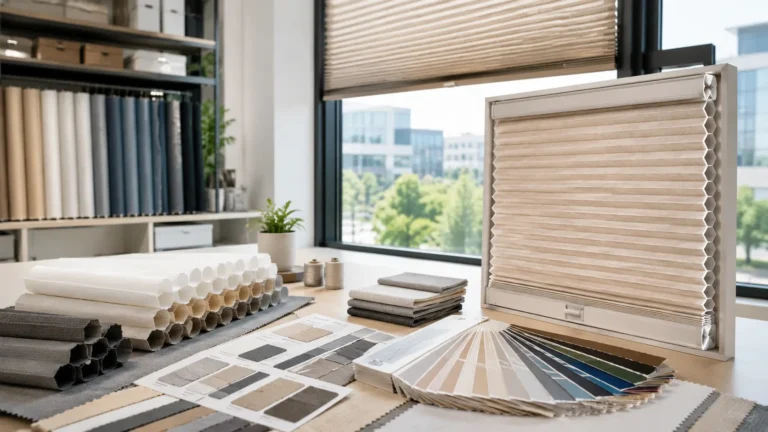
Honeycomb Shade Fabric: A Complete Guide to Performance,
Honeycomb shade fabric combines light control, thermal ins…
READ ARTICLE →